
Finding reliable Crypto Leverage Trading Platforms in 2026 can be challenging. This guide compares fees, leverage limits, liquidity, and access rules across top venues like CoinFutures, PrimeXBT, Margex, MEXC, BloFin, OKX, Binance, and Bybit. Funding options include bank transfers alongside crypto deposits and cards. We cover USDT-margined, coin-margined, and inverse contracts, plus cross vs isolated margin, auto-deleveraging, and insurance funds.
You’ll see which exchanges allow high leverage—up to 1000x on select pairs—and how KYC rules impact U.S. users. With plain tips on order types, sizing, and liquidation risk, you can pick the right platform for Bitcoin and altcoin leverage trading safely.
The Best Crypto Leverage Trading Platforms Ranked
Here are the leading crypto leverage trading platforms and leading crypto margin trading exchanges:
- CoinFutures – The top-ranked platform for gamified crypto futures with leverage up to 1000x.
- PrimeXBT – Reliable exchange offering a wide range of assets and strong support for leveraged trading.
- Margex – Popular crypto platform featuring derivatives with up to 100x leverage.
- MEXC – Well-regarded exchange providing leverage limits of up to 200x on selected products.
- BloFin – Secure leveraged trading venue with access to more than 400 cryptocurrency pairs.
- OKX – Comprehensive option for trading leveraged crypto futures and derivatives.
- Binance – Large-scale exchange enabling leveraged crypto futures via advanced tools and automation.
- Bybit – Feature-rich derivatives exchange supporting leverage up to 100x.
Full Reviews of the Top Crypto Leverage Trading Platforms
Below is a practical look at four major venues for high-margin trading and leading crypto margin trading platforms. We focus on execution, market depth, crypto derivatives fees, and leverage limits 2026 so you can match tools to strategy without guesswork.
1. CoinFutures – Gamified Crypto Futures With Extreme Leverage
CoinFutures is ranked as the No.1 leverage crypto trading platform for 2026, blending gamified features with ultra-high leverage to attract both beginners and advanced traders. The platform specializes in simulated and live crypto futures, letting you practice strategies before risking real capital. It supports a wide variety of contracts—including perpetuals, linear, and inverse futures—with transparent fee structures.
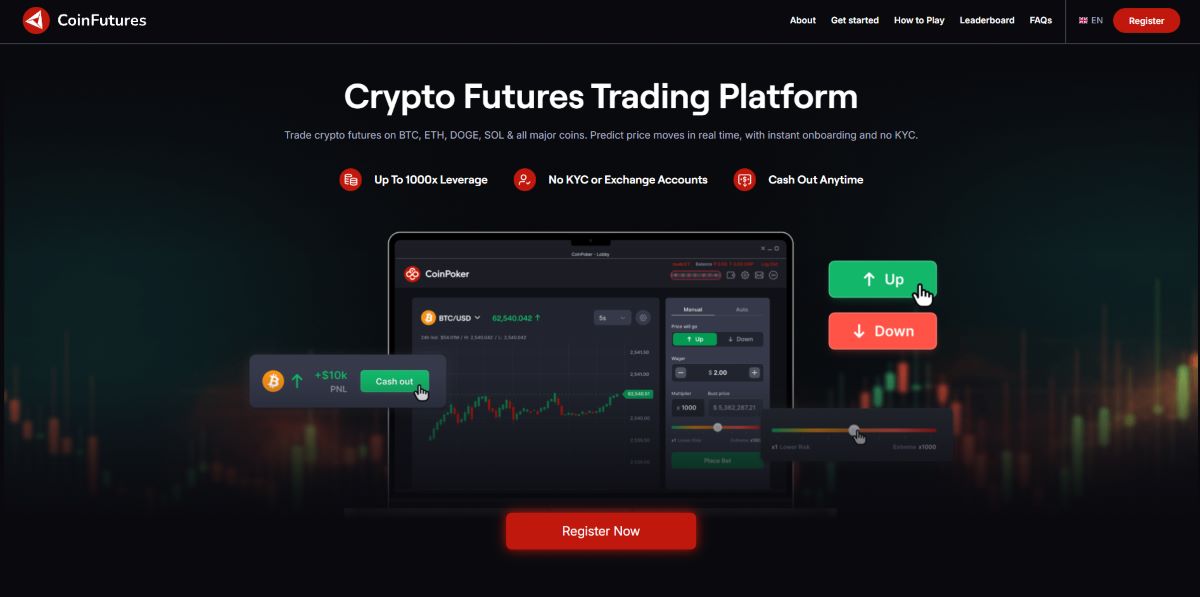
CoinFutures’ intuitive dashboard offers advanced charting tools, real-time risk metrics, and educational content to help traders master leverage safely. Its strong security framework protects user funds with measures such as multi factor authentication, cold storage, and insurance funds, in addition to responsive customer support. With its high leverage limits and gamified design, CoinFutures stands out as a distinctive venue for high-energy traders seeking both engagement and performance.
Pros:
- Up to 1000x leverage on selected crypto futures
- Gamified trading experience with built-in education
- Transparent fees and robust risk controls
- User-friendly interface plus advanced analytics
Cons:
- High leverage can significantly increase risk for inexperienced traders
2. PrimeXBT – Multi-Asset Platform for Leveraged Crypto Trading
PrimeXBT is a long-standing leverage crypto trading platform that combines a wide range of digital assets with forex, commodities, and indices in one account. This multi-asset approach lets traders diversify and hedge strategies without leaving the platform. To access margin and leverage trading features, users must first open a trading account and meet the platform’s requirements. PrimeXBT offers high leverage on major crypto pairs, along with advanced order types, customizable charts, and built-in risk management tools.
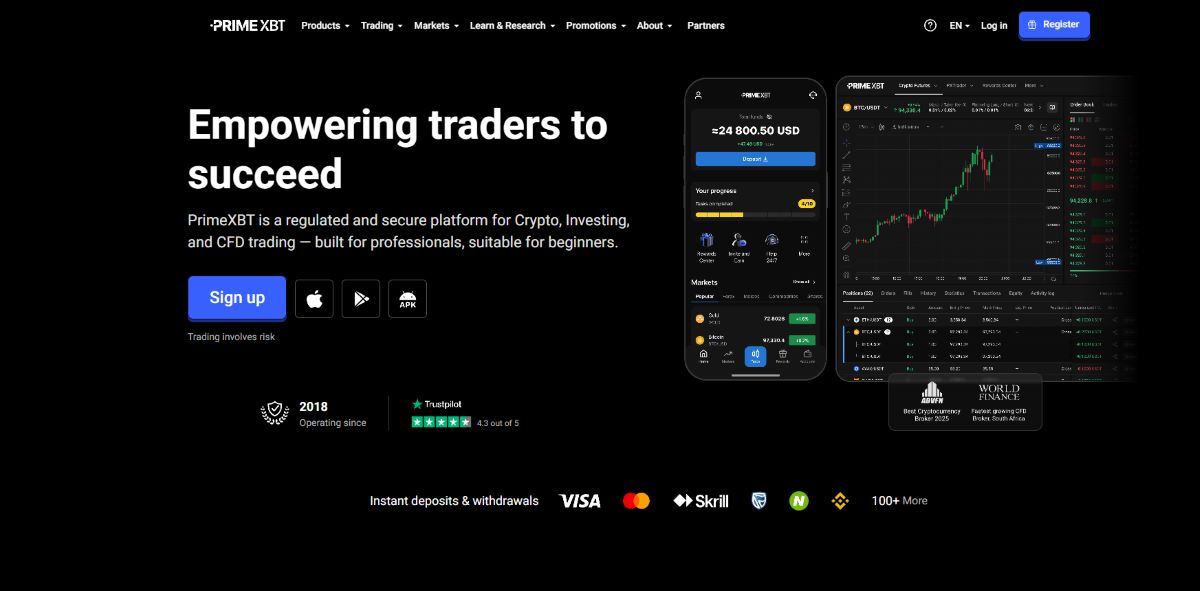
The interface is clean yet powerful, supporting both desktop and mobile trading with consistent performance. PrimeXBT also emphasizes security, with multi-signature cold storage and robust account protections. Its copy trading feature helps newcomers learn from experienced traders while managing their own risk profile.
Pros:
- Supports crypto, forex, commodities, and indices in one account
- High leverage options across major crypto pairs
- Advanced tools and intuitive interface for all skill levels
- Copy trading feature for learning and diversification
Cons:
- Full KYC may be required for certain regions or higher limits
3. Margex – Privacy-Focused Exchange With High Leverage
Margex is a crypto leverage trading platform built for traders who value privacy and straightforward design. It allows trading without mandatory KYC for many regions, offering up to 100x leverage on Bitcoin and popular altcoins. Margex combines an intuitive interface with advanced charting, transparent fees, and clear funding rates to make leverage trading easier to manage.
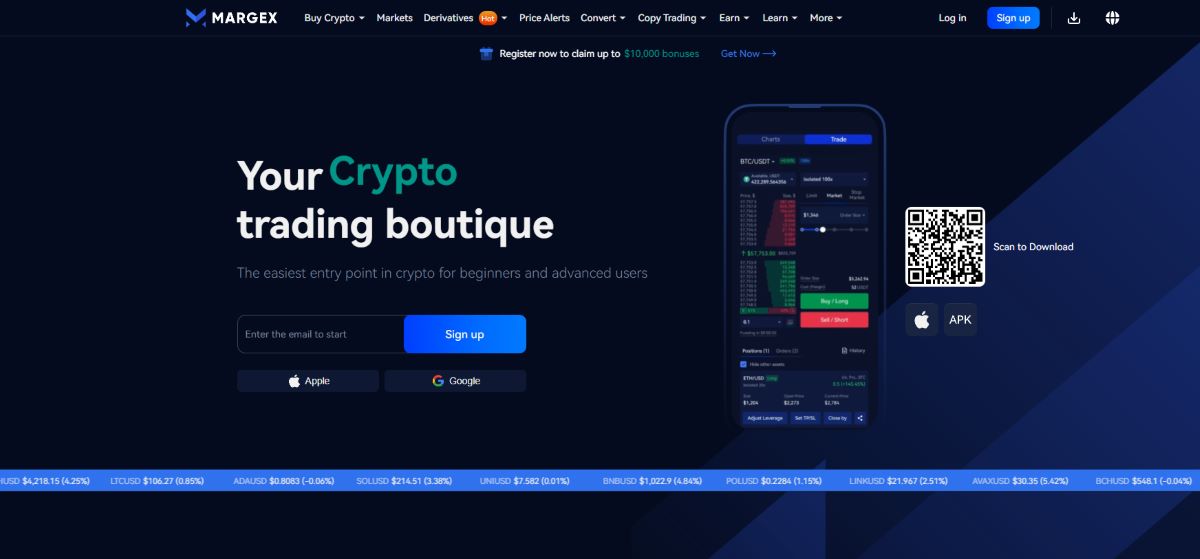
Its risk engine helps users manage risk by preventing cascading liquidations and protecting user balances during volatile markets. With a focus on security, Margex uses multi-signature cold storage and insurance funds to safeguard deposits. This balance of anonymity, simplicity, and control makes Margex a strong option for both new and experienced leverage traders.
Pros:
- No mandatory KYC for many regions
- Up to 100x leverage on BTC and major altcoins
- Transparent fees and clear funding rates
- Risk engine designed to limit liquidation cascades
Cons:
- Smaller list of trading pairs compared to larger global exchanges
4. MEXC – Broad Market Access With High Leverage
MEXC is a high-volume crypto leverage trading platform with consistently high trading volume, known for its wide selection of trading pairs and competitive fees. It offers up to 200x leverage on select futures contracts, making it attractive for traders seeking higher exposure. The platform combines deep liquidity with advanced charting tools, cross and isolated margin modes, and transparent funding rates.
MEXC’s user interface is designed to be approachable for beginners while still delivering robust features for professionals. The platform also offers advanced trading tools, including real-time data, technical analysis indicators, and customizable dashboards, supporting both novice and experienced traders. Security measures include cold storage, risk engines, and responsive customer support to help protect traders during volatile markets. With copy trading and regular promotional campaigns, MEXC also gives users ways to learn and engage with the broader community.
Pros:
- Up to 200x leverage on selected futures
- Large list of crypto pairs with deep liquidity
- Advanced tools with cross and isolated margin modes
- Copy trading and promotional rewards for active users
Cons:
- Interface and features can feel overwhelming to new traders
5. BloFin – Secure Futures Trading With a Wide Asset Range
BloFin is a crypto leverage trading platform focused on security, regulatory standards, and a large selection of digital assets. The platform demonstrates a strong commitment to regulatory compliance, providing users with assurance of safety and adherence to legal standards. It offers more than 400 cryptocurrency pairs with flexible leverage tiers to suit both retail and professional traders. BloFin’s interface combines an intuitive layout with powerful charting tools, risk controls, and portfolio management features.

The platform emphasizes transparency with clear funding rates, margin requirements, and real-time PnL tracking. Insurance funds, cold storage, and regular audits bolster user trust and help reduce counterparty risk during market volatility. Its blend of strong security practices and extensive listings makes BloFin a compelling venue for diversified leverage trading.
Pros:
- Access to 400+ crypto pairs with flexible leverage tiers
- Strong security and regular third-party audits
- Advanced risk controls and real-time PnL tracking
- User-friendly interface with professional-grade tools
Cons:
- Not as widely known as larger global exchanges
6. OKX – All-in-One Futures and Perpetuals Platform
OKX is a leading crypto leverage trading platform offering futures, perpetual swaps, and options in one place. Traders can access deep liquidity, flexible margin modes, and leverage tiers tailored to different risk profiles. Flexible leverage options allow traders to adjust their market exposure, amplifying both potential gains and risks depending on their chosen leverage ratio and collateral management. The platform’s interface combines intuitive navigation with professional-grade charting, strategy builders, and robust APIs for automation.
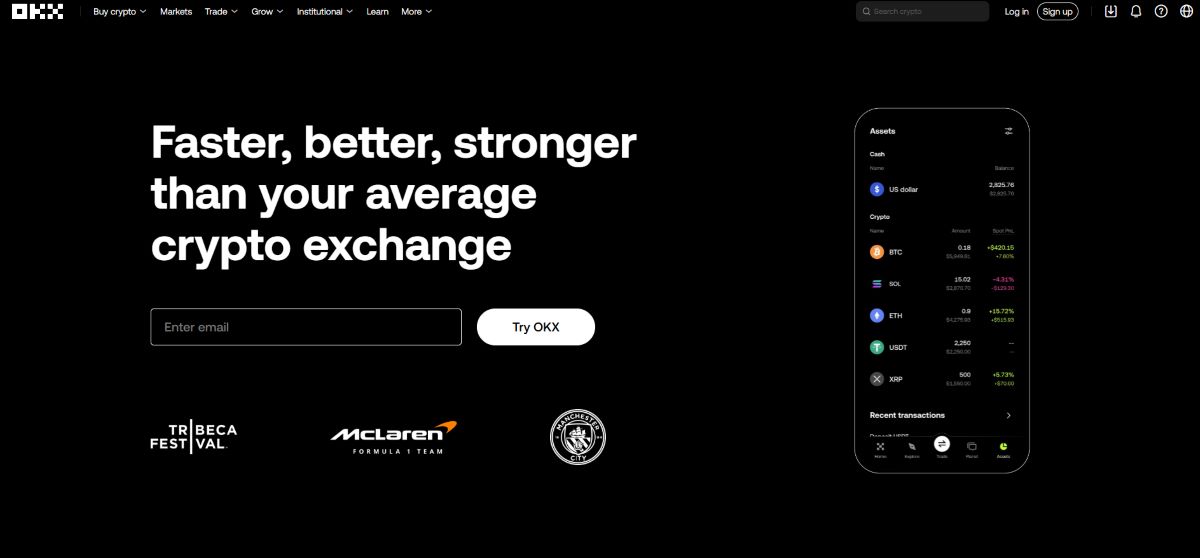
OKX also integrates a Web3 wallet, bridging centralized trading with DeFi and enabling seamless asset transfers. Security remains a core strength, with multi-layered protection, proof of reserves audits, and insurance funds to safeguard user assets during volatility. This blend of advanced tooling and broad market coverage makes OKX a top choice for both retail and institutional traders seeking leverage.
Pros:
- Wide range of derivatives including futures, perpetuals, and options
- Flexible margin modes with deep liquidity
- Web3 wallet integration and strong APIs
- Proof-of-reserves audits and robust insurance funds
Cons:
- Some features and tools may feel complex to beginners
7. Binance – Largest Futures Exchange With Deep Liquidity
Binance is the world’s biggest crypto leverage trading platform, offering futures, perpetuals, and options across hundreds of cryptocurrencies. With ultra-deep liquidity and tight spreads, Binance provides fast execution even during high volatility. The platform supports multiple margin modes—cross, isolated, and portfolio—with a wide range of leverage tiers, including USDT-margined and coin-margined contracts. Cross and portfolio margin modes allow traders to efficiently manage multiple positions by optimizing collateral allocation and risk across several open trades.
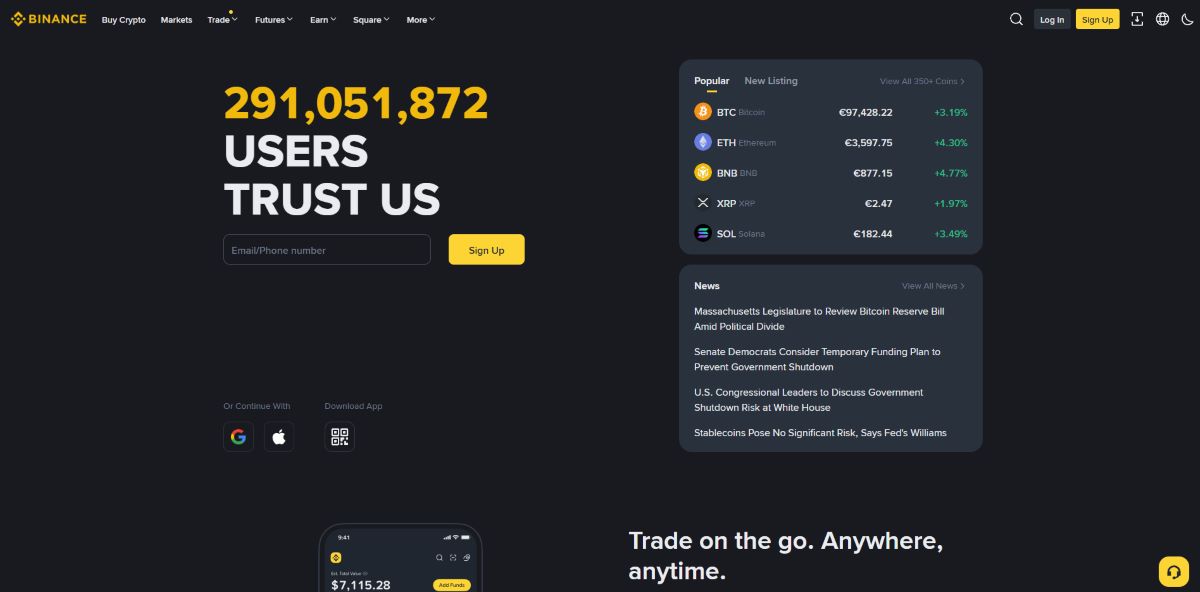
Its interface combines powerful charting tools, advanced order types, and robust APIs for institutional-grade strategies. Binance also emphasizes security and compliance with cold storage, insurance funds, and proof-of-reserves audits. This blend of market depth, tools, and safety makes Binance a go-to exchange for high-volume crypto futures trading.
Pros:
- Ultra-deep liquidity with fast execution
- Multiple margin modes and wide leverage tiers
- Advanced tools, APIs, and institutional features
- Strong security and proof-of-reserves audits
Cons:
- U.S. traders face restrictions and must use Binance.US with limited access
8. Bybit – Feature-Rich Derivatives Exchange With High Leverage
Bybit is a popular crypto leverage trading platform offering perpetuals and futures on hundreds of cryptocurrencies. Known for its deep liquidity and tight spreads, Bybit provides reliable execution even during volatile markets. The platform supports advanced order types, customizable leverage settings, and both cross and isolated margin modes, allowing traders to maximize their trading opportunities and potential profits.
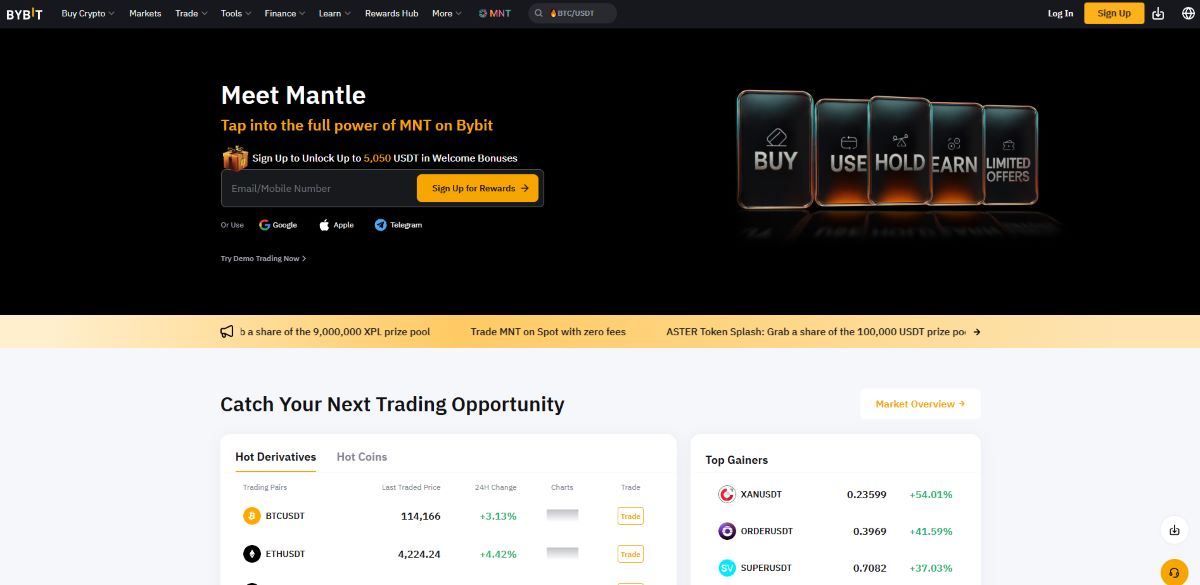
It also features an intuitive interface and mobile app for seamless trading across devices. Security is a core strength, with cold storage, risk engines, and insurance funds to protect user balances. Bybit further engages its community with copy trading, competitions, and educational resources for all skill levels.
Pros:
- High liquidity and tight spreads for smooth execution
- Extensive range of perpetual and futures contracts
- Advanced order types with flexible leverage and margin modes
- Copy trading and educational support for beginners
Cons:
- Not fully available to U.S. residents without restrictions
Comparing the Best Crypto Leverage Platforms by Core Metrics
This crypto exchange comparison focuses on metrics that move trade outcomes. We look at leverage caps, derivatives liquidity, maker taker fees, funding rates, risk controls, and how each venue handles an insurance fund and proof of reserves. When comparing platforms, it’s important to understand both trading fees and futures trading fees, as these costs can significantly impact your profitability and strategy. The goal is practical: match platform strengths to your strategy without guesswork.
| Platform | Leverage Caps | Derivatives Liquidity | Maker Taker Fees | Funding Rates & Schedules | Risk Controls | Product Coverage | Account/KYC | Reliability | Funding & Payments | Insurance Fund & Proof of Reserves |
| CoinFutures | Up to 1000x on select pairs | Varies by pair; watch depth | Tiered; check maker rebates | Standard intervals; monitor spikes | Isolated/Cross, ADL indicators | Perpetuals focus; fixed expiries on majors; spot trading not available | KYC may be required for limits | Engine stability improving | Crypto deposits; stablecoins common | Insurance fund disclosed; proof of reserves status varies |
| MEXC | Up to 500x on flagship contracts | Competitive across many alts | Low maker taker fees; VIP tiers | Frequent updates; monitor rate bands | Partial liquidation, maintenance tiers | Broad USDT perpetuals; some coin-margined; spot trading available | KYC for full features | Solid uptime during volatility | Cards, P2P, stablecoins | Transparent insurance fund; proof of reserves reports |
| Margex | Up to 100x | Adequate on supported pairs | Simple maker taker fees | Clear schedules; easy to track | Isolated/Cross, ADL visibility | USDT-margined futures lineup; no spot trading | No-KYC onboarding highlighted | Stable execution for retail size | Crypto deposits, stablecoins | Insurance fund details; proof of reserves communications |
| Binance | Typically up to 125x on BTC/ETH | Market-leading depth and spreads | VIP tiers; maker rebates on high volume | Granular funding rates; transparent | Tiered margins, partial liquidation, ADL | USDT/coin-margined perpetuals, options, dated futures; spot trading available | KYC standard; regional limits apply | High throughput; robust APIs | Cards, bank, P2P, stablecoins | Large insurance fund; real-time proof of reserves |
| OKX | Commonly up to 125x on top pairs | Strong depth on majors | Competitive maker taker fees | Consistent schedules; detailed displays | Maintenance tiers, ADL, portfolio margin | Perpetuals, coin-margined, options; spot trading available | KYC for higher limits | Reliable matching engine | Fiat on-ramps, P2P, stablecoins | Insurance fund transparency; proof of reserves updates |
| Bybit | Commonly up to 125x on top pairs | Leader in derivatives liquidity | Tiers with rebates for makers | Clear funding rates; easy to audit | ADL meter, partial liquidation | Perpetuals, inverse, options; spot trading available | KYC for full access | Low downtime; strong APIs | Cards, P2P, stablecoins | Insurance fund stats; proof of reserves reporting |
| PrimeXBT | Moderate to high, market-dependent | Focused depth on core pairs | Simple fee schedule | Standard intervals; watch cost of carry | Cross/Isolated, margin tiers | Crypto futures; multi-asset exposure; no spot trading | KYC policies vary by region | Consistent during spikes | Crypto deposits, stablecoins | Insurance fund info; proof of reserves disclosures |
| BloFin | Moderate to high, pair-specific | Growing depth across markets | Competitive maker taker fees | Routine updates; trackable in-app | ADL, isolated/cross margin | USDT perpetuals; expanding lineup; spot trading available | KYC for elevated limits | Improving engine metrics | Stablecoin deposits; P2P options | Published insurance fund; proof of reserves notes |
Use this crypto exchange comparison to match leverage caps with your risk tolerance and time frame. For scalping, derivatives liquidity and API stability matter most. For swing trades, monitor funding rates, maker taker fees, and the clarity of each insurance fund.
Operational trust also counts. Platforms that publish proof of reserves and real-time risk dashboards help reduce blind spots. Combine margin tools, product breadth, and payment rails with your trade plan before you size up.
What is Crypto Leverage Trading?
Leverage lets traders control a larger position with less capital. Think of it as using borrowed buying power against posted collateral. The leverage ratio determines how much a trader can borrow relative to their initial investment, with different leverage ratios affecting both the potential reward and the risk of loss. With 10x, a 1% move becomes 10% on your equity—up or down. That is crypto leverage explained in simple terms, and it depends on strict margin requirements and clear risk rules.
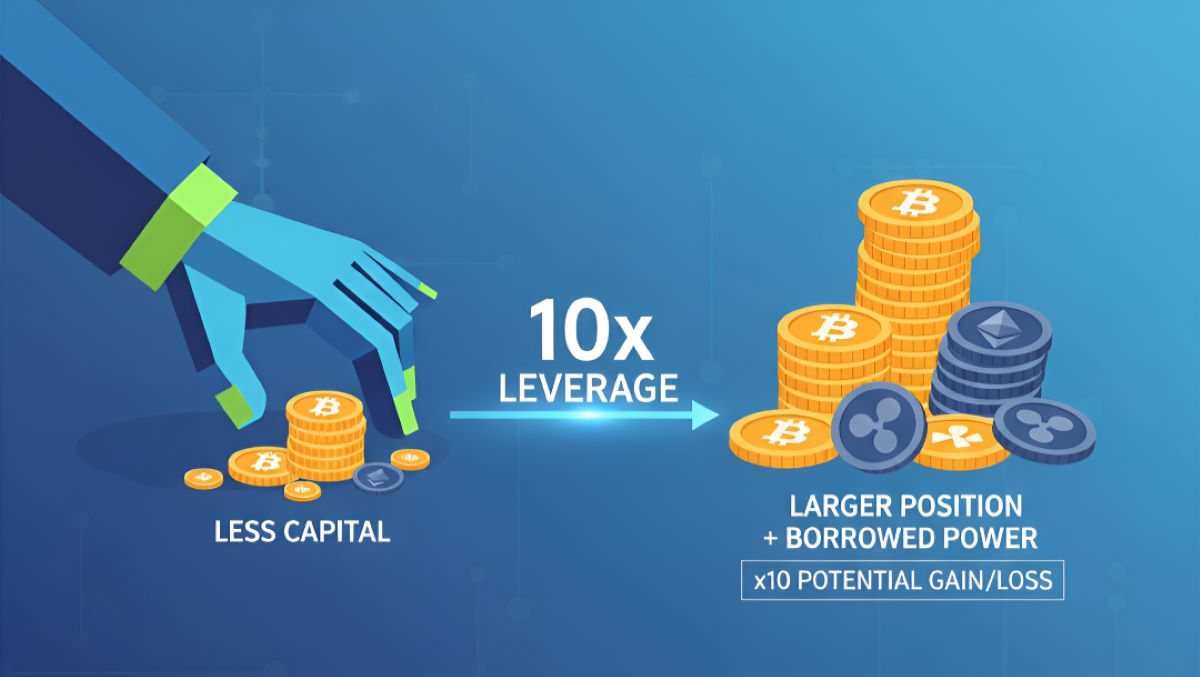
Traders use borrowed funds to increase their market exposure beyond their initial investment, effectively deploying additional capital to amplify both potential gains and losses.
Key Concepts to Understand in 2026
Exchanges use a maintenance margin threshold to keep positions open. Drop below that level and you face partial or full liquidation. Many platforms now stage liquidations to reduce wipeouts, while also raising initial margin requirements on thin or volatile pairs.
Choose between isolated vs cross margin. Isolated limits risk to one trade, which caps damage if it fails. Cross margin mode shares equity across positions and can reduce liquidation risk on a single leg, yet it can also expose the whole account during fast moves. In cross margin mode, the entire account balance is used as collateral for all open positions, increasing both potential protection and risk.
Derivatives dominate crypto leverage explained today. The perpetual swaps definition: contracts that track an index price with no expiry. To keep the contract near spot, exchanges apply funding rates that pass payments between longs and shorts at set intervals.
During stress, platforms like Binance, Bybit, and OKX may cut maximum leverage dynamically. Slippage rises, and maintenance margin ladders step up with size. Understanding funding rates, position tiers, and order book depth is vital before scaling exposure.
Crypto Leverage vs Margin Trading Explained
In crypto, margin trading often means borrowing to buy or short spot assets on crypto margin trading exchanges. Leverage trading typically refers to derivatives that embed exposure through margin without direct loans in your name. Perps and futures offer higher caps, but they also tighten margin requirements as size grows.
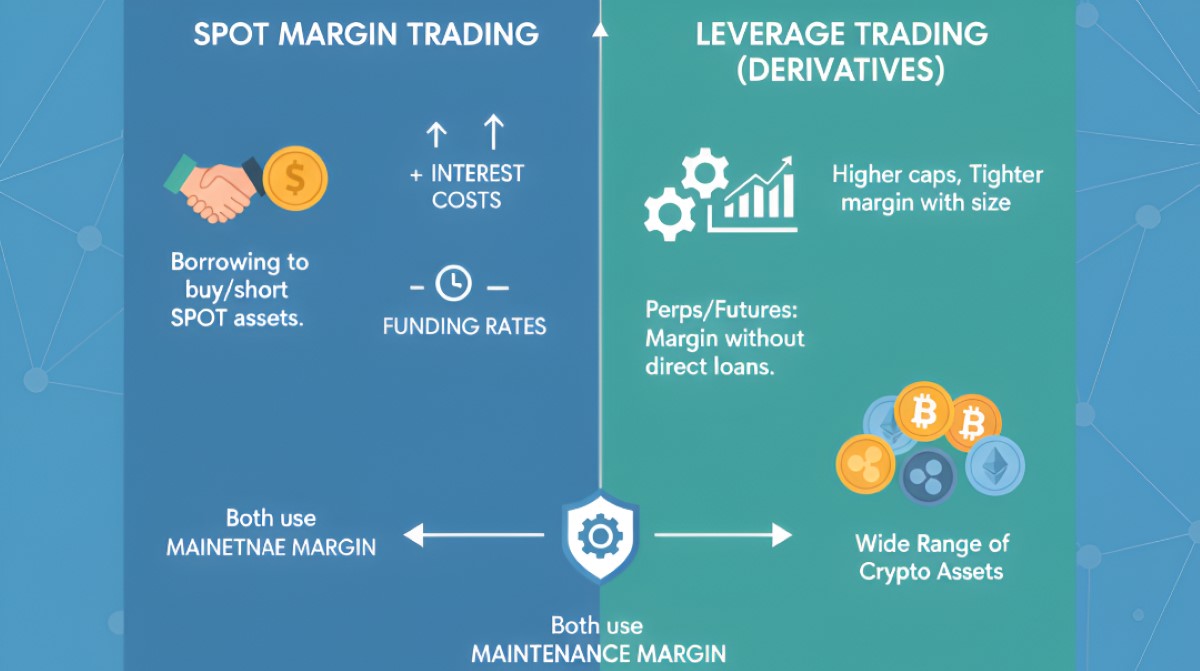
These platforms support a wide range of crypto assets, including both major cryptocurrencies and lesser-known tokens, allowing traders to diversify their strategies.
Spot margin has interest costs on the borrowed asset. Perpetuals use funding rates instead, which can flip positive or negative through the day. Both models hinge on maintenance margin and smart use of isolated vs cross, but derivatives usually provide finer risk tools and dynamic safeguards.
Before placing any order, map your liquidation price, review the perpetual swaps definition on your venue, and test how fees and funding rates impact PnL over time. That is crypto leverage explained for 2026—practical, risk-first, and tuned to real market conditions.
How Does Crypto Leverage Trading Work?
Crypto leverage trading lets you control larger positions by posting an initial margin as collateral. You pick a multiplier, and the exchange sizes your order accordingly. In perpetual futures, contracts never expire but track spot markets through funding payments and index prices. You don’t own the asset directly; your PnL mirrors the underlying price movements.
Exchanges use a mark price derived from weighted indices to prevent manipulation. Liquidation happens at the mark price, not the last trade. Higher leverage narrows your safety buffer, so small moves can force a close. Cross margin pools all account equity to back positions, while isolated margin caps risk to a single trade.
Execution depends on clear order types: market, limit, stop, and trailing stop, often paired with take-profit or stop-loss brackets. Funding rates, typically every eight hours, shift costs between longs and shorts.
Before trading, check each platform’s tick size, margin tiers, and ADL rules. Match your leverage and margin mode to your risk tolerance, monitor unrealized PnL, and adjust quickly as conditions change.
Why Do Traders Use Leverage? Key Benefits
Leverage helps active traders do more with less. It unlocks capital efficiency, sharper entries, and flexible risk tools on platforms like Binance, Bybit, OKX, MEXC, Margex, and PrimeXBT. When combined with effective trading strategies, leverage can amplify potential profits by allowing traders to maximize gains during favorable market movements.
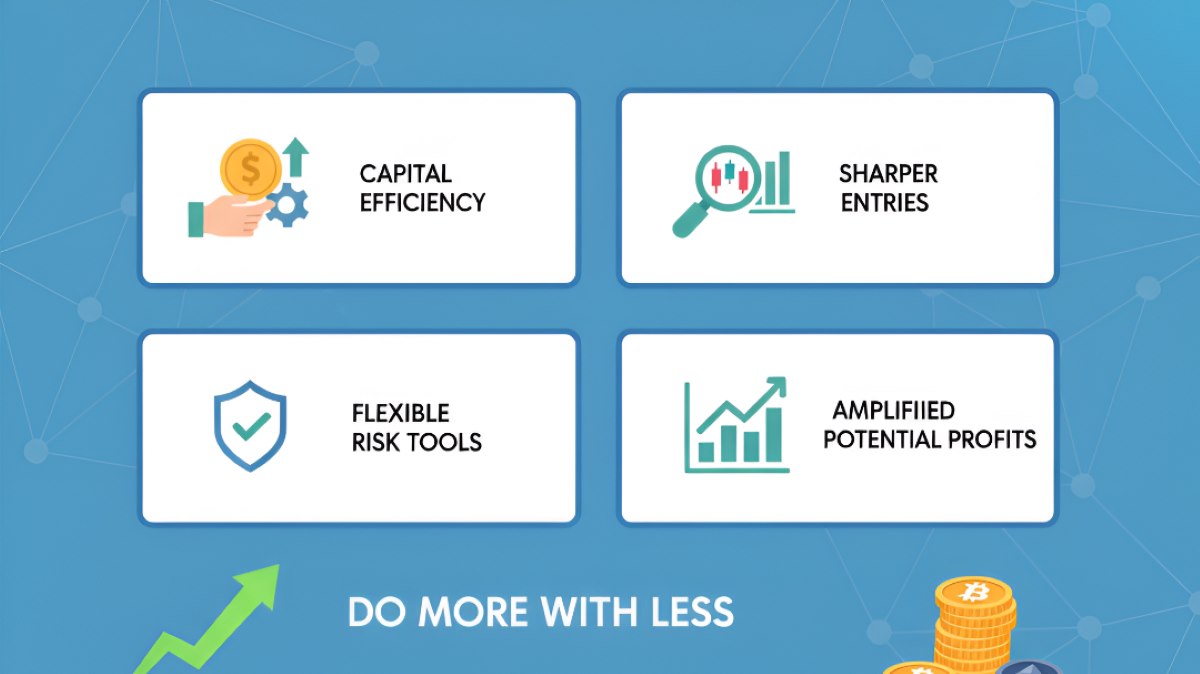
Used with discipline, it supports intraday scalps, swing trades, and portfolio hedges while keeping cash free for other opportunities.
Amplify Profits With Small Capital
Leverage increases exposure without tying up the full position size. However, using higher leverage introduces higher risk to your trading capital, as potential losses can be amplified just as much as profits. A trader can scale into BTC or ETH moves using tight stops and clear take‑profit targets. This approach supports capital efficiency, helping scalpers and swing traders reach goals while keeping spare cash ready.
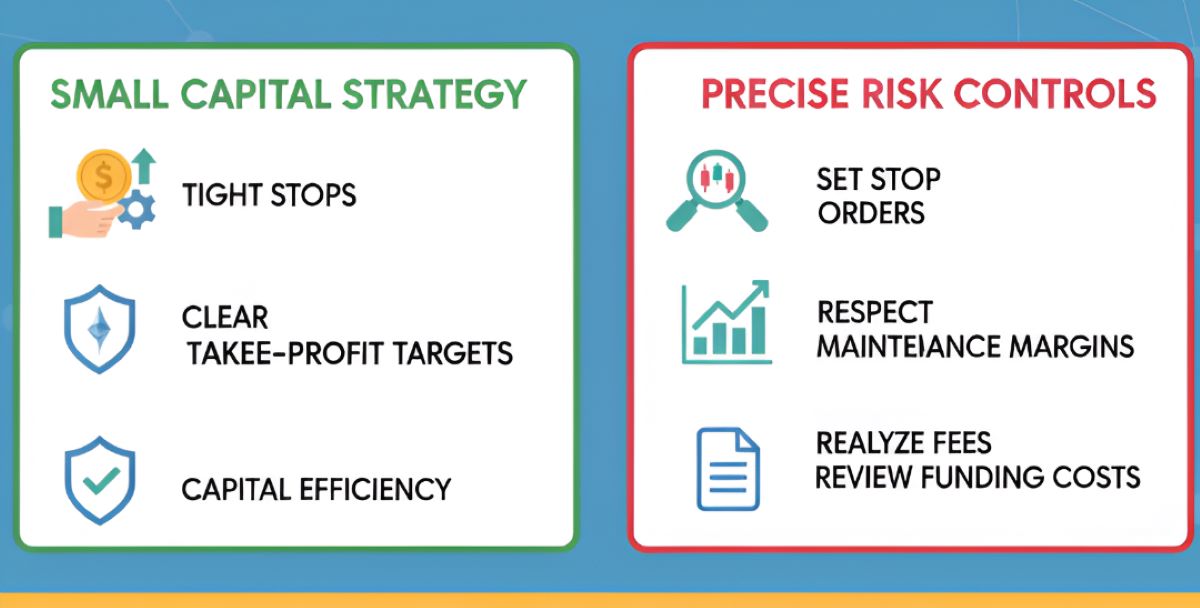
Because buffers shrink at higher leverage, precise risk controls matter. Set stop orders, respect maintenance margins, and review funding costs before each trade.
Risks of Trading Crypto With Leverage
Leverage can speed up gains, but it also compresses the room for error. Improper use of leverage can lead to significant financial setbacks, especially in volatile market conditions. Traders should map out how price swings, platform rules, and regional laws can affect entries and exits before placing orders.
Liquidation Risk and Margin Calls
High leverage makes even small moves dangerous, raising liquidation price risk on fast markets. Sudden volatility and unexpected market movements can trigger margin calls and cascading liquidations, while ADL may close winning positions to backstop the system.
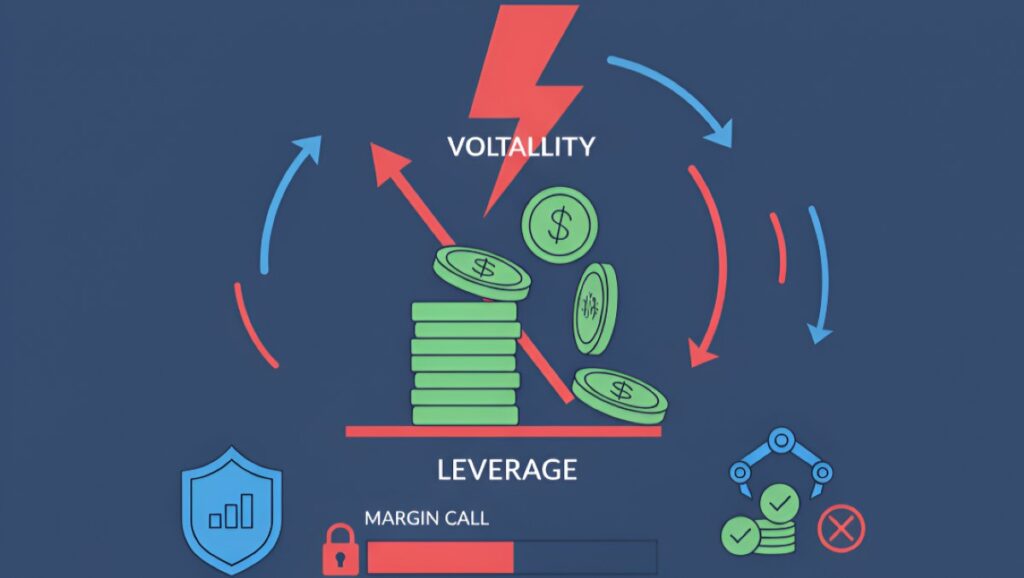
Some venues use partial liquidation tiers to shrink positions instead of nuking the whole account. That helps, but it does not erase risk when spreads widen and funding flips.
Counterparty and Platform Risk
Derivatives traders rely on exchange solvency, custody controls, and the size of the insurance fund. Platform outages during peak volatility can block adjustments, cancel stops, or delay fills when they matter most.
Review proof-of-reserves disclosures, cold storage policies, and security audits on platforms like Binance, Bybit, OKX, MEXC, PrimeXBT, Margex, BloFin, and CoinFutures. Strong risk engines, clear ADL rules, and transparent incident reports add confidence. Always compare these security measures with those offered by other exchanges before choosing a platform.
Emotional Stress and Overtrading
Leverage can fuel impulsive entries, revenge trading, and oversizing after losses. A simple plan helps: preset daily loss limits, fixed position sizing, and automated stops that you do not move.
Keep a trade journal and use alerts instead of watching every tick. Cool-down periods after a loss streak reduce tilt and protect capital.
Regulatory Restrictions in Certain Regions
Rules change by country and can shift without much notice. U.S. access restrictions may block offshore derivatives, and new policies can cap leverage, require KYC, or delist products.
Check terms of service and regional pages for each exchange and assess compliance risk before funding. Confirm tax treatment and the legal status of perpetuals in your state to avoid surprise account limits or forced position closures.
Step-by-Step Guide to Trading Crypto With Leverage
Set a clear trading plan before you place your first order. Start small, learn the tools, and keep risk tight. Make sure to familiarize yourself with available trading tools, such as trailing stops and take-profit orders, to optimize your strategies. The steps below show how to go from signup to a live position with guardrails in place.
Create an Account on a Leverage Trading Platform
Open crypto futures account options include CoinFutures, PrimeXBT, Margex, MEXC, BloFin, OKX, Binance, and Bybit.
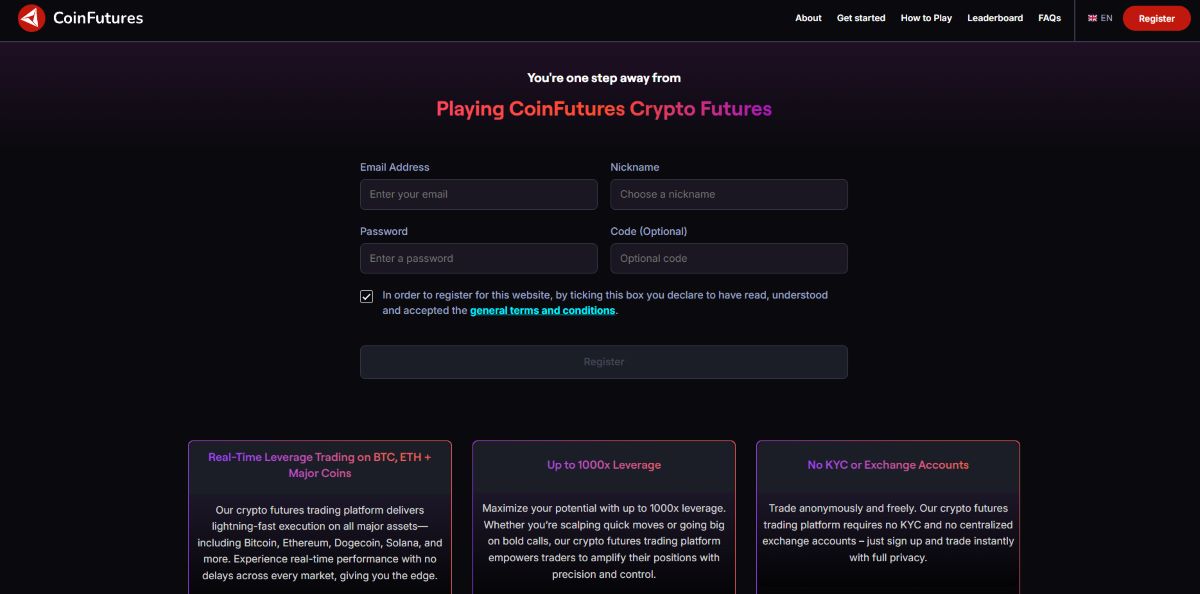
Some platforms require full KYC for higher limits and fiat ramps, while Margex highlights no-KYC onboarding. Enable 2FA, withdrawal whitelists, and an anti-phishing code before funding.
Fund Your Account With Crypto or Fiat
Deposit USDT or other stablecoins like USDC, or send BTC and ETH. Where supported, use bank cards, bank transfers, ACH, or P2P to convert fiat.
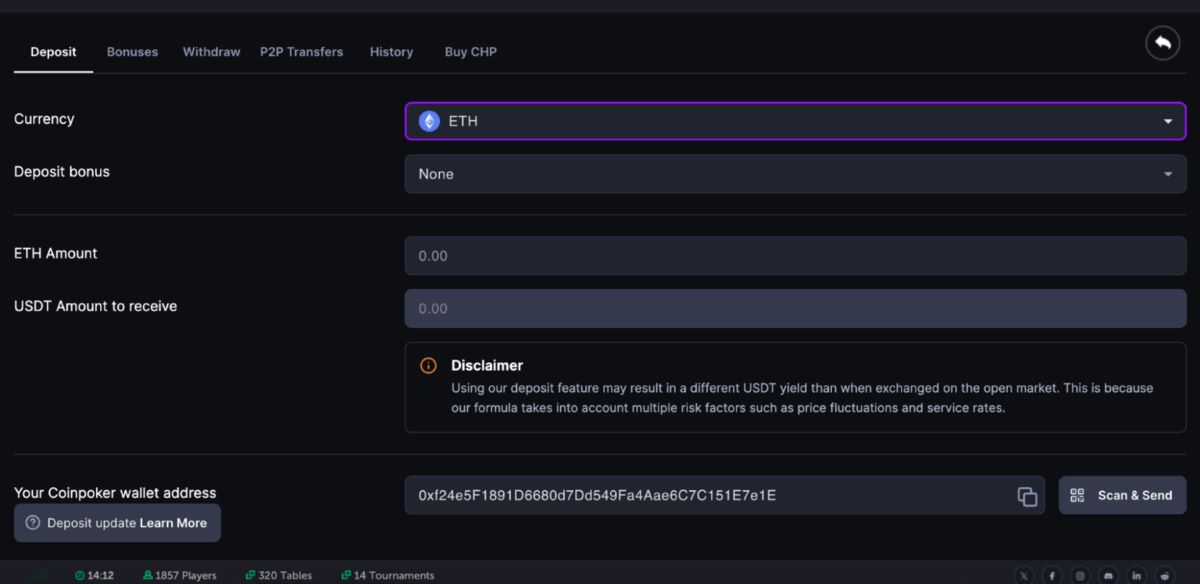
Double-check the network and minimums so your funds arrive fast and safe.
Select the Market and Leverage Level
Pick a perpetual pair such as BTCUSDT and review contract specs, tick size, and funding times. Choose leverage conservatively at first, often 2x–5x, then scale as you gain skill. Note that leverage caps change by asset and position size.
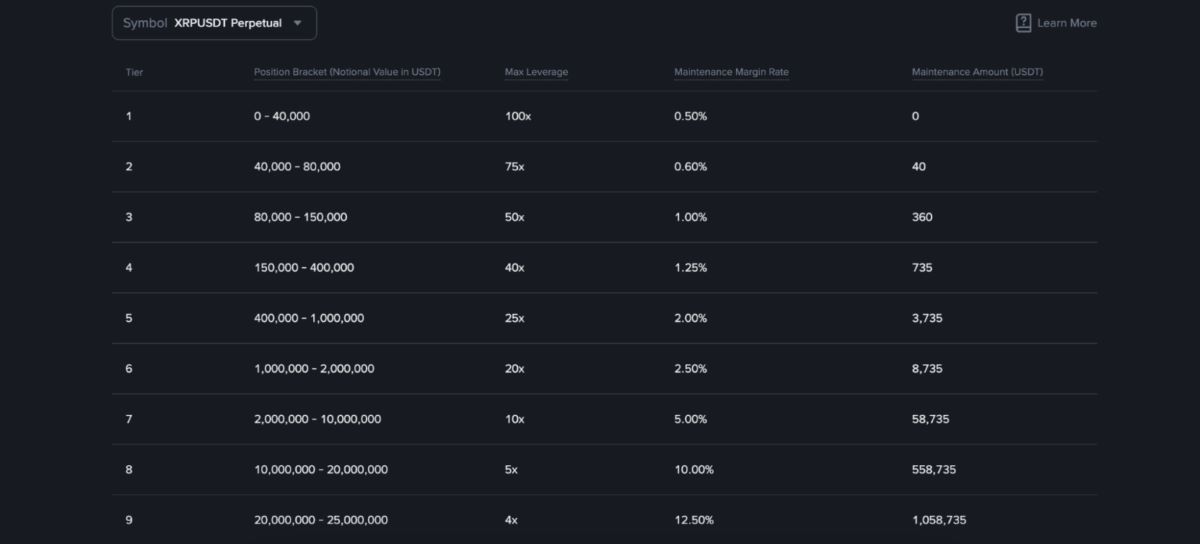
Different leverage ratios are available for various trading pairs and assets, so review the specific leverage ratios offered for each market before trading.
Set Entry, Exit and Risk Parameters
Use a limit order for precise entries and define a stop-loss setup and take-profit in advance, or use bracket orders. Bracket orders can include both stop-loss and take profit orders to automate exits and lock in gains. Size the trade with a fixed-risk model, such as 0.5%–2% of your account per idea. Watch funding rates, mark price, and maintenance margin to avoid surprise liquidations.
After entry, manage the position with trailing stops or partial take-profit levels as price moves. Do not widen risk; adjust only when your trading plan calls for it and the market confirms your thesis.
How to Pick the Right Leverage Trading Platform
Choosing the right leverage trading platform starts with knowing your needs and limits. These quick points help you focus on access, costs, tools, and security before you trade.
- Check access and KYC. Confirm U.S. availability and decide between KYC vs no-KYC since it affects deposits and support.
- Seek low fees and high liquidity. Binance, Bybit and OKX excel on majors; MEXC on altcoins; Margex and BloFin vary by pair.
- Compare total costs. Review maker/taker fees, funding rates, and withdrawal charges.
- Understand leverage controls. Look at margin tiers, isolated vs cross modes, and risk engine quality.
- Evaluate tools. Check order types, mobile apps, APIs, and copy trading.
- Review security. Proof-of-reserves, cold storage, insurance funds, and incident history show trustworthiness.
- Test first. Open small accounts and place test orders to gauge slippage and performance.
Future Trends in Crypto Leverage Trading
Expect 2026 crypto derivatives trends to push risk systems forward. Exchanges are rolling out dynamic leverage controls that shift limits with volatility and depth, helping active traders size positions with more precision. Partial liquidation and circuit breakers will become default tools, lowering tail risk during sharp moves.
Greater transparency is set to win trust. Platforms are extending proof of reserves with liabilities attestations and clearer insurance fund reports. This pairs with compliance in crypto as major venues align on standardized KYC, leverage caps, and geofencing, while institutions get portfolio margin and cross-collateral frameworks.
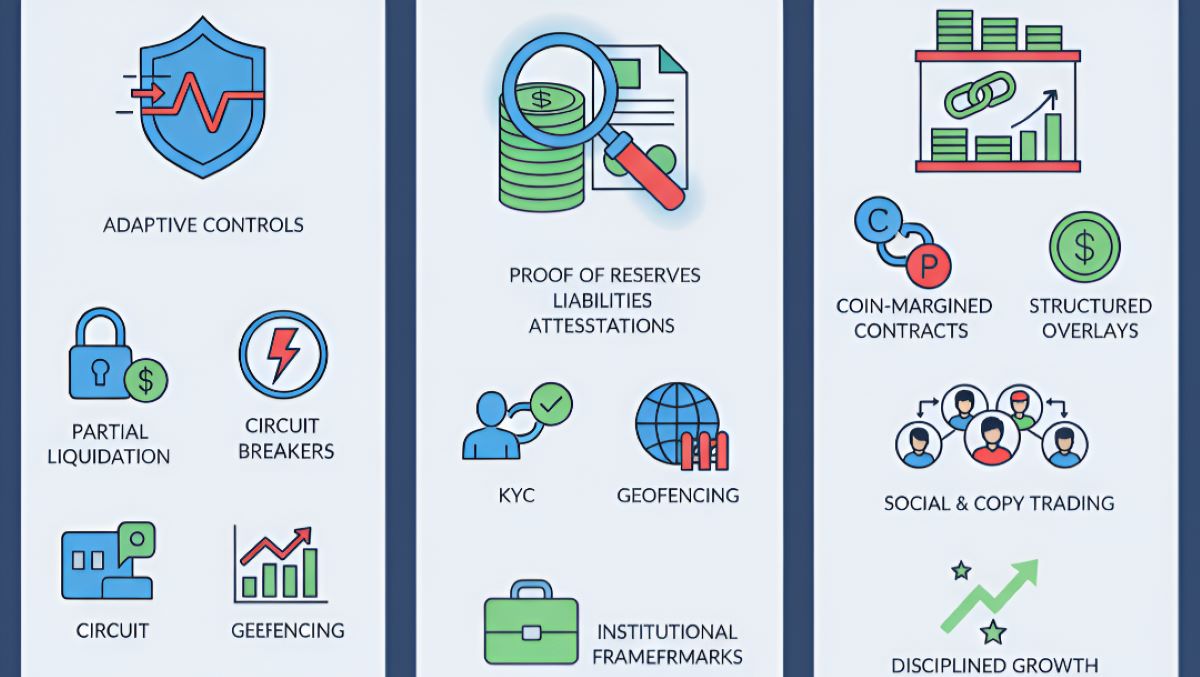
Product shelves keep expanding. The rise of digital currency is driving innovation in trading products and strategies, as the crypto market evolves to include new asset classes and risk tools. Options growth on Binance, Bybit, and OKX deepens liquidity for hedges and yield. On-chain perps emerge through hybrid models that blend CEX order books with oracle-secured settlement. Expect more coin-margined contracts and structured overlays for covered strategies and basis trades linked to tokenized Treasuries.
Social and copy trading gain traction with tighter drawdown controls and clearer risk metrics. Better user protections arrive via stress-tested ADL logic and smarter margin tiers. The net effect is a market that rewards discipline and gives traders more ways to express views across volatility cycles.
| Theme | What Changes | Who Leads | Trader Impact |
| Risk Engines | Dynamic leverage controls, adaptive margin tiers | Binance, Bybit, OKX | More consistent fills; fewer forced exits in spikes |
| Transparency | Proof of reserves with liabilities and fund reporting | Kraken, Coinbase, Bitstamp | Higher accountability and balance-sheet clarity |
| Derivatives Mix | Options growth and coin-margined listings | Binance Options, Deribit, OKX | Richer hedging and premium income strategies |
| On-Chain Models | Hybrid CEX liquidity plus on-chain perps settlement | dYdX, GMX, Hyperliquid | Custodial flexibility and oracle-driven pricing |
| Compliance | Compliance in crypto with standardized KYC and caps | Coinbase, Gemini | Clearer access rules; institutional-grade margin |
| User Protections | Partial liquidation, circuit breakers, robust ADL | Bybit, OKX | Reduced tail events and smoother risk outcomes |
| RWA & Basis | Instruments referencing tokenized Treasuries and ETFs | Ondo Finance, Backed, Franklin Templeton on-chain | Carry trades and precise duration hedges |
Together, these 2026 crypto derivatives trends show a market maturing on rails built for speed and safety. With options growth, on-chain perps, proof of reserves, and compliance in crypto moving in step, traders can align strategy with structure as liquidity deepens across cycles.
Conclusion
CoinFutures stands out as the No.1 leverage crypto trading platform for 2026, combining ultra-high leverage with a clean interface and strong risk controls. Traders seeking deep liquidity and smooth execution often use Binance, Bybit, and OKX, while MEXC appeals to altcoin hunters and Margex offers a no-KYC model. PrimeXBT suits multi-asset traders, and BloFin serves those wanting a secure, diversified venue.
To choose a crypto futures exchange with confidence, compare leverage caps, fees, liquidity tiers, and security practices. Keep positions conservative, use hard stop-losses, and understand funding rates and liquidation levels before trading. Regulation also matters—check availability and compliance policies before funding an account. With CoinFutures at the top of your list and disciplined risk rules, you can trade high-margin crypto strategies more responsibly in 2026’s fast-moving markets.
FAQ
What are the top Crypto Leverage Trading Platforms for 2026?
Leading venues include Binance, Bybit, OKX, MEXC, Margex, PrimeXBT, BloFin, and CoinFutures. They offer perpetual swaps, futures, and margin products with varying leverage caps, liquidity depth, and fee schedules. Binance and Bybit usually lead in derivatives volume, while OKX and MEXC shine in altcoin coverage.
How much leverage can I use on these exchanges?
It depends on the asset and your position size. CoinFutures markets up to 1000x on select pairs, MEXC offers up to 500x on flagship contracts, Binance, Bybit, and OKX commonly reach up to 125x on BTC and ETH, and Margex typically caps at 100x. Real-time risk engines may lower these limits during high volatility.
Are U.S. traders allowed on these platforms?
Access is restricted on many offshore derivatives exchanges. Binance.com, Bybit, OKX, and MEXC apply geofencing and KYC rules that limit U.S. usage. Some users consider platforms like Margex for no-KYC onboarding, but you should verify terms of service and comply with local regulations.
What’s the difference between leverage trading and margin trading?
Margin trading generally means borrowing funds to trade spot assets. Leverage trading often refers to derivatives like perpetual futures that use margin to gain exposure without direct borrowing in your name. Derivatives usually support higher leverage and have funding rates, maintenance margin tiers, and ADL mechanisms.
Which platforms have the best liquidity for BTC and ETH?
Binance and Bybit typically provide the deepest order books and tightest spreads on BTC and ETH perpetuals. OKX also shows strong depth on major pairs. MEXC is competitive across many altcoins, while liquidity on BloFin and CoinFutures can vary by pair.